
For Appointments, call 077009 99193

Spine Surgery Myths: The Truth You Need to Know
Spine problems can cause back pain, neck pain, stiffness, and difficulty performing daily activities. Many people feel worried when they hear the word surgery because they believe it is painful, risky, or requires a long recovery period. However, these beliefs are not always correct. Understanding Spine Surgery Myths: The Truth You Need to Know can help patients make informed decisions about their spine health and available treatment options.
At The Spine Clinic, patients can learn about different approaches to managing spine conditions. Consulting an experienced spine specialist can help identify the cause of pain and determine whether medication, physiotherapy, lifestyle changes, or surgery may be appropriate.

Why Do People Believe Myths About Spine Surgery?
Fear of surgery often comes from stories shared by friends, family members, or information found online. Some patients believe that surgery should always be avoided, while others think it is the only solution for severe back pain.
In reality, every spine condition is different. The right treatment depends on the diagnosis, severity of symptoms, overall health, and response to non-surgical care. A qualified spine doctor can explain the available options and help patients understand the benefits and risks of each approach.
Myth 1: Spine Surgery Always Causes Paralysis
Fact: Paralysis is a recognised but uncommon complication of spine surgery.
One of the biggest concerns patients have is the fear of losing movement after an operation. Although nerve or spinal cord injury is a possible risk, paralysis does not occur after every spine procedure.
Modern surgical techniques, careful planning, and appropriate monitoring help surgeons manage these risks. The actual risk depends on the patient’s condition and the type of procedure required.
Before choosing surgery, discuss your concerns with a qualified spine surgeon in Mumbai who can explain the expected benefits, possible complications, and alternative treatments.
Myth 2: Spine Surgery Is Always Necessary for Back Pain
Fact: Many spine conditions improve with non-surgical treatment.
Back pain does not automatically mean that an operation is needed. Depending on the underlying cause, doctors may recommend physiotherapy, suitable exercises, medication, or changes in daily activities.
For example, some patients with a slipped disc experience improvement through conservative treatment. Surgery may be considered when symptoms remain severe despite appropriate care or when significant nerve compression is present.
If you are experiencing persistent discomfort, consulting a spine specialist in Mumbai can help you understand the cause of your symptoms and choose an appropriate treatment plan.
Myth 3: Spine Surgery Is Extremely Painful
Fact: Postoperative discomfort can often be managed with appropriate medical care.
Some pain and soreness are expected after surgery, but modern pain-management methods can help patients remain comfortable during recovery.
Doctors may recommend prescribed medicines, suitable positioning, gradual movement, and rehabilitation exercises. The level of discomfort depends on the procedure and the patient’s health.
Patients should follow their surgeon’s instructions and report unusual symptoms, such as worsening pain, fever, or new weakness. Proper follow-up care is an important part of recovery.
Myth 4: Recovery From Spine Surgery Takes Many Months
Fact: Recovery time varies from person to person.
Some people assume they must remain in bed for months after spine surgery. However, recovery depends on the procedure, the severity of the condition, and the patient’s overall health.
Certain patients may begin walking with assistance soon after surgery, while those undergoing complex procedures may require a longer recovery period.
An experienced spine doctor in Mumbai can provide guidance on returning to work, driving, exercising, and performing everyday activities. Following medical advice and completing recommended rehabilitation can support a safer recovery.
Myth 5: Every Slipped Disc Requires Surgery
Fact: Many slipped discs can be managed without an operation.
A slipped disc occurs when the soft material inside a spinal disc moves outward and may press against nearby nerves. Symptoms can include back pain, neck pain, tingling, numbness, or pain that travels into the arms or legs.
Treatment depends on symptom severity and the degree of nerve compression. Many patients improve with medication, physiotherapy, and appropriate activity modifications.
Surgery may be recommended when conservative treatment does not provide sufficient relief or when significant nerve problems develop. New bladder or bowel control problems, numbness around the groin, or rapidly worsening leg weakness require emergency medical assessment.
Myth 6: Spine Surgery Never Provides Long-Term Relief
Fact: Surgery can provide lasting improvement for appropriately selected patients.
The outcome of spine surgery depends on the underlying condition, the procedure performed, and the patient’s health. Surgery may relieve pressure on nerves, improve spinal stability, or reduce symptoms caused by specific structural problems.
However, complete pain relief cannot be guaranteed. Some patients may continue to experience discomfort or develop other spine-related problems over time.
Maintaining a healthy weight, practising appropriate exercises, improving posture, and following medical advice can help support long-term spine health.
When comparing treatment options, patients looking for the best spine specialist in Mumbai should consider relevant qualifications, experience, and the ability to explain realistic treatment outcomes.
Myth 7: All Spine Surgeries Are the Same
Fact: Different conditions require different surgical procedures.
Spine surgery includes several procedures designed to address specific problems.
- Discectomy: Removes the portion of a disc that is pressing on a nerve.
- Laminectomy: Removes part of the vertebral bone to create more space for nerves.
- Spinal fusion: Joins two or more vertebrae to improve stability.
- Artificial disc replacement: Replaces a damaged disc with an artificial one in selected patients.
A spine specialist doctor in Mumbai will assess your symptoms, physical examination, imaging reports, and treatment history before recommending a suitable procedure.
Surgery should be considered based on medical need rather than assumptions about which procedure is most advanced.
When Should You Consult a Spine Specialist?
Occasional back pain may improve with rest and appropriate self-care. However, persistent pain that affects sleep, walking, work, or daily activities deserves medical evaluation.
You should also consult a doctor if you experience recurring neck pain, numbness, tingling, or weakness in your arms or legs.
People searching online for a spine doctor in Mumbai should look for a qualified professional who can assess their symptoms and explain appropriate treatment options. Seek emergency medical care if you develop new bladder or bowel control problems, numbness around the groin, or rapidly progressing weakness.
Early assessment can help identify the underlying problem and reduce the risk of delaying necessary treatment.
To learn more about available spine consultation options, visit The Spine Clinic’s best spine surgeon in thane service page. You can also find the clinic using this Spine Specialist Surgeon thane
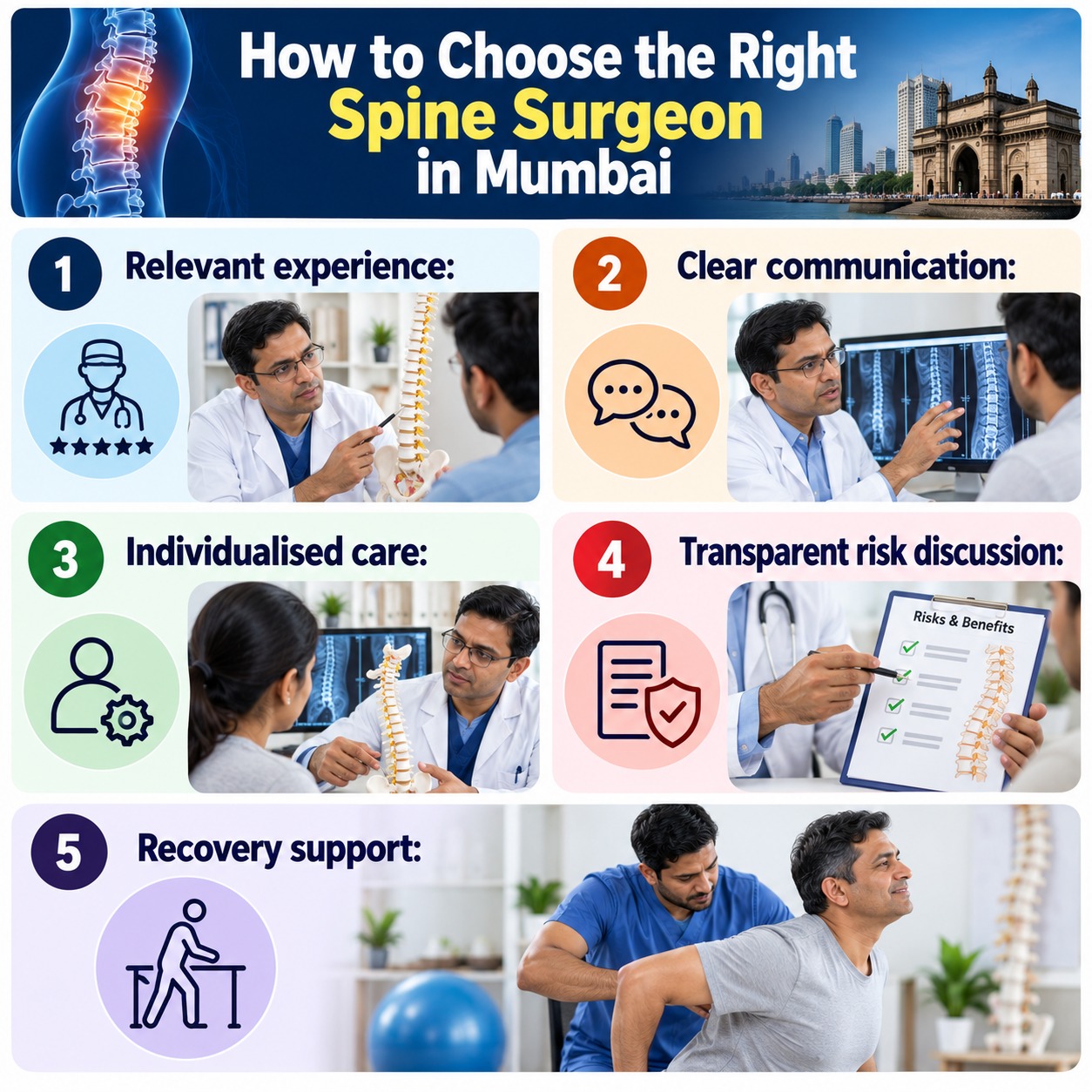
How to Choose the Right Spine Surgeon in Mumbai
Choosing a surgeon requires more than looking at online rankings. Patients should consider the doctor’s qualifications, experience with their particular condition, communication style, and approach to treatment.
If you are searching for the best spine surgeon in Mumbai consider these important factors:
- Relevant experience: Ask about the surgeon’s experience treating your specific spine condition.
- Clear communication: The doctor should explain your diagnosis and treatment options in simple language.
- Individualised care: Recommendations should be based on your symptoms, examination, and medical reports.
- Transparent risk discussion: Understand the potential benefits, complications, and alternatives before making a decision.
- Recovery support: Ask about rehabilitation, follow-up visits, and activity restrictions.
Patients comparing the top spine surgeon in Mumbai or the top spine specialist in Mumbai should focus on relevant expertise and treatment suitability rather than rankings alone. Similarly, someone looking for the best orthopedic doctor in Mumbai for spine problems should verify that the doctor has appropriate training and experience in managing the specific condition.
Conclusion
Spine surgery myths can create unnecessary fear and prevent patients from seeking appropriate medical advice. The truth is that many spine conditions can improve without surgery, while others may benefit from a carefully planned procedure.
The right treatment depends on the cause of your symptoms, your overall health, and your response to previous treatments. Avoid making decisions based only on online stories or general advice.
If you have persistent back pain, neck pain, or symptoms related to nerve compression, consult a qualified specialist for an evaluation. The Spine Clinic can help you explore available spine care options and understand the next steps towards better spine health.
Copyright © 2025 Website is Designed and Handle by Hopeland Healthcare