
For Appointments, call 077009 99193

Why Does Back Pain Get Worse After Sitting for Long Hours?
Sitting for long hours has become a common part of modern life. Office work, studying, driving, travelling, and spending time on computers or mobile devices can keep you seated for several hours every day. Over time, many people begin to notice lower back pain, stiffness, or discomfort, especially when they stand up after sitting.
But why does back pain get worse after sitting for long hours? Prolonged sitting can place continuous stress on the spine and surrounding muscles. Poor posture, lack of movement, weak core muscles, and existing spinal problems can make the pain more noticeable.
Understanding the reasons behind sitting-related back pain can help you make simple changes to protect your spine and know when professional evaluation may be necessary.
Why Does Back Pain Get Worse After Sitting for Long Hours?
When you sit for an extended period, your spine stays in almost the same position for a long time. This can increase pressure on the lower back and cause the surrounding muscles to become tired and stiff.
The problem can become worse if you lean forward toward a computer, slouch in your chair, or sit without adequate back support. Staying in one position also reduces normal movement of the spine and hips.
People who already have conditions such as a slipped disc, spinal arthritis, muscle strain, or nerve compression may experience more discomfort after prolonged sitting.
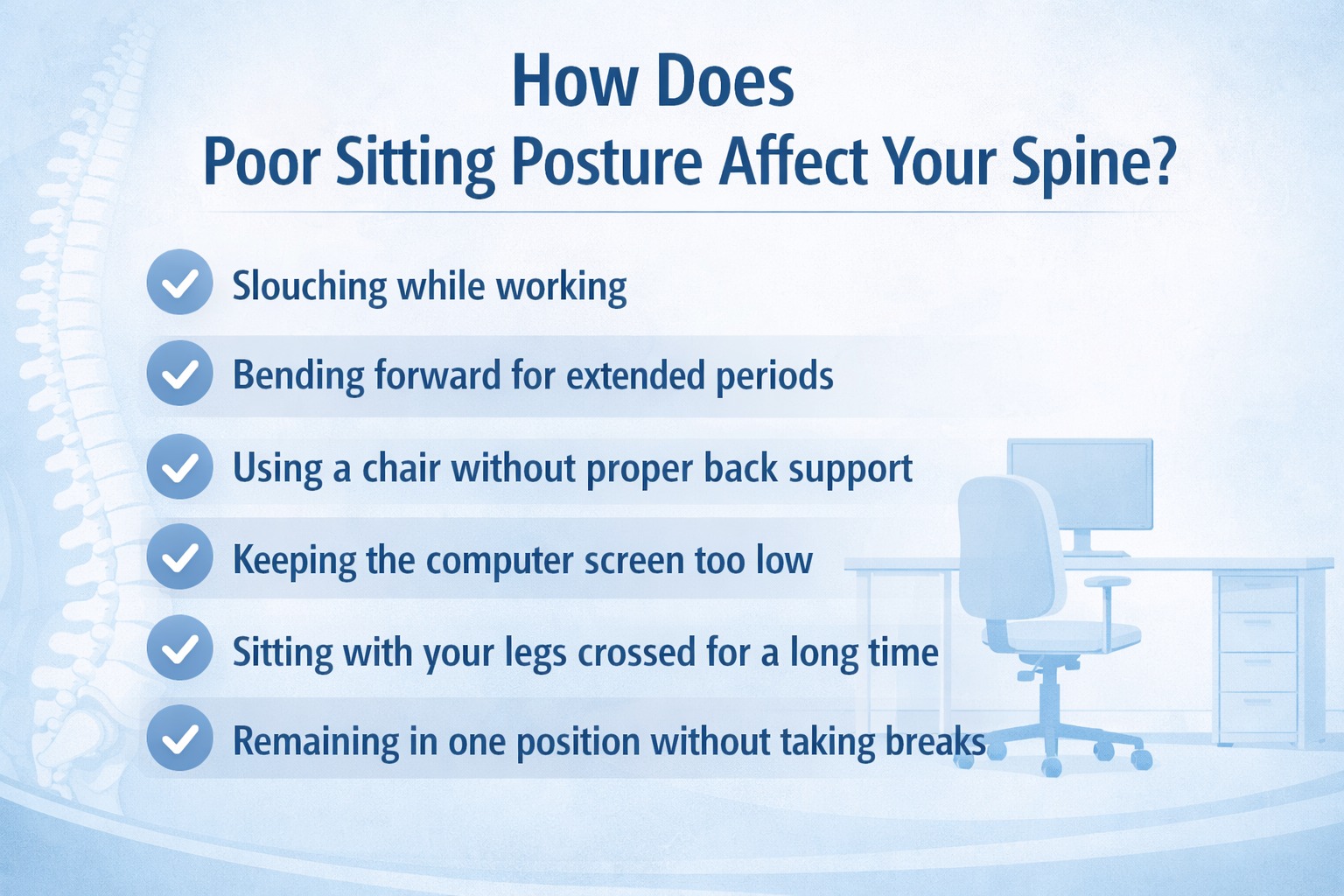
How Does Poor Sitting Posture Affect Your Spine?
Your sitting posture can have a significant effect on how your back feels at the end of the day. Slouching may change the natural alignment of the spine and increase the workload on certain muscles and joints.
Some common sitting habits that may contribute to back discomfort include:
- Slouching while working
- Bending forward for extended periods
- Using a chair without proper back support
- Keeping the computer screen too low
- Sitting with your legs crossed for a long time
- Remaining in one position without taking breaks
A comfortable chair with suitable lumbar support can help. However, even a good sitting position should not be maintained continuously for several hours. Regular movement is important for spinal health.
Can Sitting for Long Hours Cause Lower Back Pain?
Yes, prolonged sitting can contribute to lower back pain or make existing pain worse. This is particularly common when long sitting is combined with limited physical activity and poor posture.
When you remain seated, the muscles around your lower back and hips may become stiff. Over time, weak abdominal and back muscles may also provide less support to the spine.
However, persistent back pain should not automatically be blamed on sitting. It may sometimes indicate an underlying spinal condition that requires professional assessment.
If your back pain continues or repeatedly returns, consulting a Back Pain Doctor can help identify possible causes and guide you toward appropriate treatment.
What Are the Common Symptoms of Sitting-Related Back Pain?
Back pain associated with prolonged sitting can feel different from person to person. Common symptoms may include:
- Dull or aching pain in the lower back
- Stiffness after getting up from a chair
- Tightness around the hips or lower back
- Pain that improves after walking or changing position
- Discomfort that becomes worse toward the end of the day
- Pain that may occasionally spread toward the buttocks or legs
If you experience severe pain, persistent numbness, tingling, muscle weakness, or difficulty walking, it is important to seek medical attention rather than relying only on posture changes.
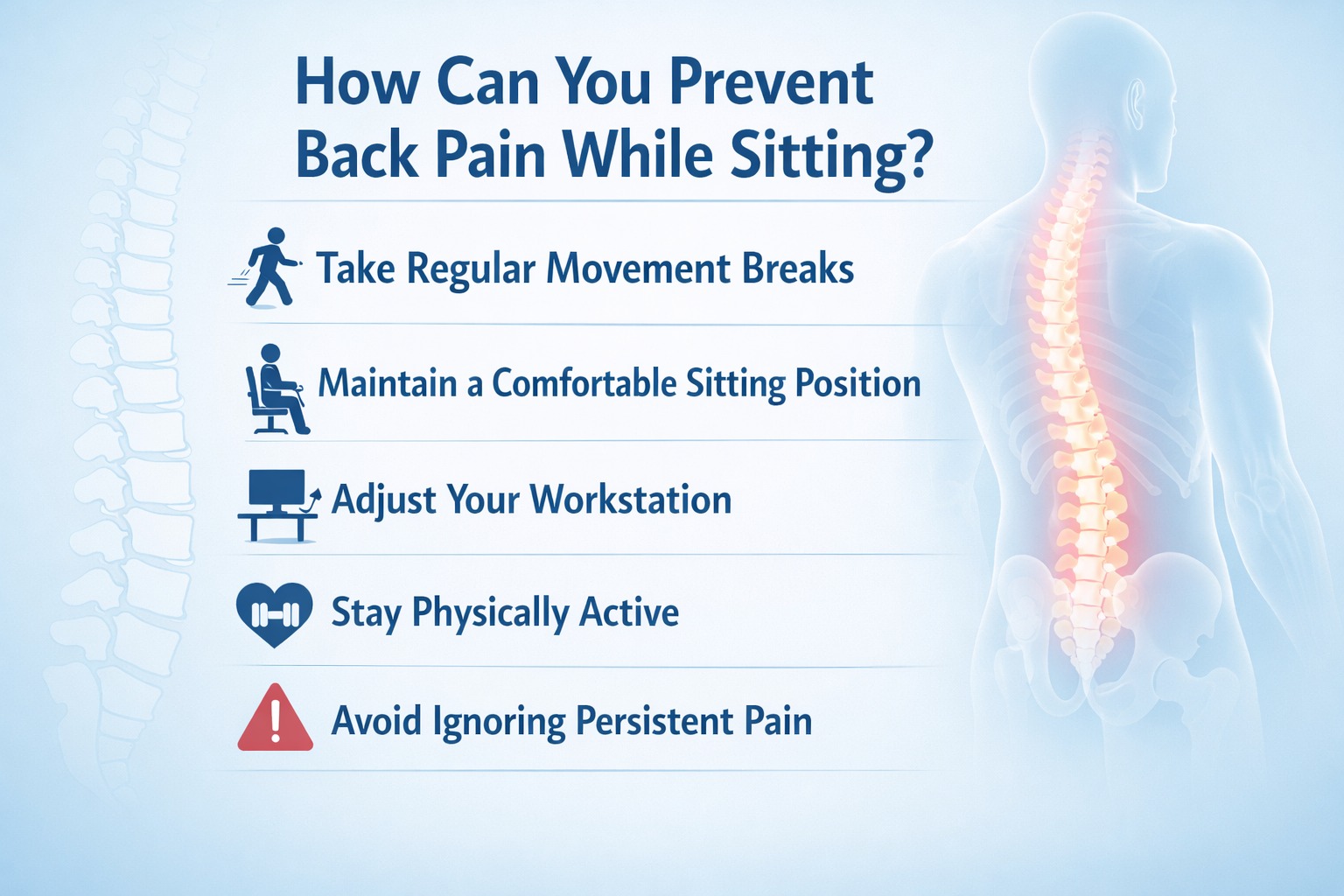
How Can You Prevent Back Pain While Sitting?
Small changes to your daily routine can make sitting more comfortable and may help reduce unnecessary strain on your back.
Take Regular Movement Breaks
Avoid sitting continuously for several hours. Stand up regularly, walk around for a few minutes, or perform gentle movements. Changing your position gives your muscles and joints a break.
Maintain a Comfortable Sitting Position
Keep your back supported and your feet comfortably supported on the floor. Try to keep your shoulders relaxed rather than constantly leaning toward your screen.
Adjust Your Workstation
Your computer screen should be positioned at a comfortable height so you do not need to bend your neck or upper back continuously. Keep your keyboard and mouse within easy reach.
Stay Physically Active
Regular physical activity can help maintain flexibility and strengthen muscles that support the spine. Walking, appropriate stretching, and professionally recommended strengthening exercises can be useful for many people.
Avoid Ignoring Persistent Pain
If your back pain continues despite improving your sitting habits, professional evaluation may be necessary. Finding the underlying cause is important for choosing the right treatment.
When Should You See a Spine Specialist?
Not every episode of back pain requires surgery or extensive treatment. However, persistent or recurring symptoms deserve attention.
Consider consulting a spine specialist if:
- Your pain lasts for several weeks
- Pain is becoming progressively worse
- Pain travels from your back into your leg
- You experience numbness or tingling
- You notice weakness in your legs
- Back pain is affecting your work or sleep
- Pain started after an accident or injury
A back pain specialist clinic can evaluate your symptoms and determine whether you need further examination, imaging, physiotherapy, medication, or another form of treatment.
Does Every Back Pain Problem Need Spine Surgery?
No. Most people with back pain do not automatically require surgery. Treatment depends on the cause, severity, duration, and impact of the symptoms.
Non-surgical approaches may include physical therapy, activity modification, medication when appropriate, posture correction, and exercises recommended by a healthcare professional.
For patients who have specific spinal conditions and do not improve with appropriate conservative treatment, surgery may sometimes be considered.
If you are searching online for a spine surgeon in Navi Mumbai, it is important to first understand whether your condition actually requires surgical treatment. A qualified specialist can assess your symptoms and discuss suitable options.
What Should You Consider Before Spine Surgery?
If surgery is recommended, patients often have questions about the procedure, recovery, risks, and expenses. Searching for the Best spine surgeon in Navi Mumbai or a top spine surgeon in Navi Mumbai can be a starting point, but experience with your particular spinal condition and a clear explanation of treatment options are equally important.
The type of procedure required depends on the diagnosis. Different problems may require different surgical approaches, and surgery is not a single treatment for every type of back pain.
Patients considering spine surgery in Navi Mumbai should discuss the expected benefits, possible risks, recovery period, and available alternatives with their treating specialist.
How Much Does Spine Surgery Cost?
The cost of spine surgery in Navi Mumbai can vary considerably depending on the type of surgery, hospital, surgeon’s expertise, diagnostic investigations, medical requirements, and length of hospital stay.
For this reason, there is no single fixed price that applies to every patient. A consultation and proper diagnosis are important before discussing an estimated treatment cost.
When comparing Spine Surgery Hospitals in Navi Mumbai patients should consider factors such as the hospital’s facilities, surgical team, safety standards, postoperative care, and suitability for the specific spinal condition rather than choosing a hospital based only on price.
Those looking for a Spine Specialist Surgeon in Navi Mumbai should also ask questions about both surgical and non-surgical treatment options before making a decision.
Conclusion
Understanding why does back pain get worse after sitting for long hours can help you make better choices throughout your day. Maintaining a comfortable posture, taking regular movement breaks, staying physically active, and avoiding prolonged uninterrupted sitting can help reduce unnecessary strain on your back.
However, persistent back pain should not be ignored. If symptoms continue or are associated with leg pain, numbness, weakness, or difficulty with normal activities, professional evaluation can help identify the underlying cause.
The right treatment depends on the individual condition. Whether the solution involves lifestyle changes, physiotherapy, medication, or specialist treatment, an early and accurate assessment can help you make informed decisions about your spine health.
When Should You See a Spine Specialist?
Occasional mild back discomfort may improve with rest and appropriate activity. However, some symptoms should not be ignored.
Consider seeking medical evaluation if you experience:
- Back or neck pain that continues or becomes worse
- Pain that travels into an arm or leg
- Numbness or tingling
- Weakness in the arms or legs
- Difficulty walking or maintaining balance
- Back pain after an accident or injury
- Repeated episodes of severe back pain
A specialist can review your symptoms, medical history, and physical condition and decide whether further tests or treatment are required.
People searching for a top spine surgeon in Mumbai should focus not only on online rankings but also on the doctor’s qualifications, experience, treatment approach, and suitability for their specific condition.
For patients who may eventually require surgery, the cost of spine surgery in Mumbai can vary depending on the procedure, hospital, diagnostic tests, medical requirements, and other factors. A consultation is the best way to understand the likely treatment plan and associated expenses.
Similarly, people comparing Spine Surgery Hospitals in Mumbai should consider factors such as specialist availability, facilities, emergency support, surgical expertise, and follow-up care rather than choosing only on the basis of price.
Conclusion
Protecting your spine does not always require complicated changes. Maintaining good posture, taking regular movement breaks, lifting objects correctly, staying physically active, and sleeping with comfortable support are five practical habits that can become part of your everyday routine.
These habits can support overall spine health, but they cannot prevent every spine condition. If you have persistent pain, numbness, weakness, or other concerning symptoms, professional evaluation is important. If treatment is recommended, a qualified spine surgery in Mumbai specialist can explain the available options based on your condition.
For location and clinic information, you can also find the Backbone Doctor
Copyright © 2025 Website is Designed and Handle by Hopeland Healthcare